
 Maya Reed
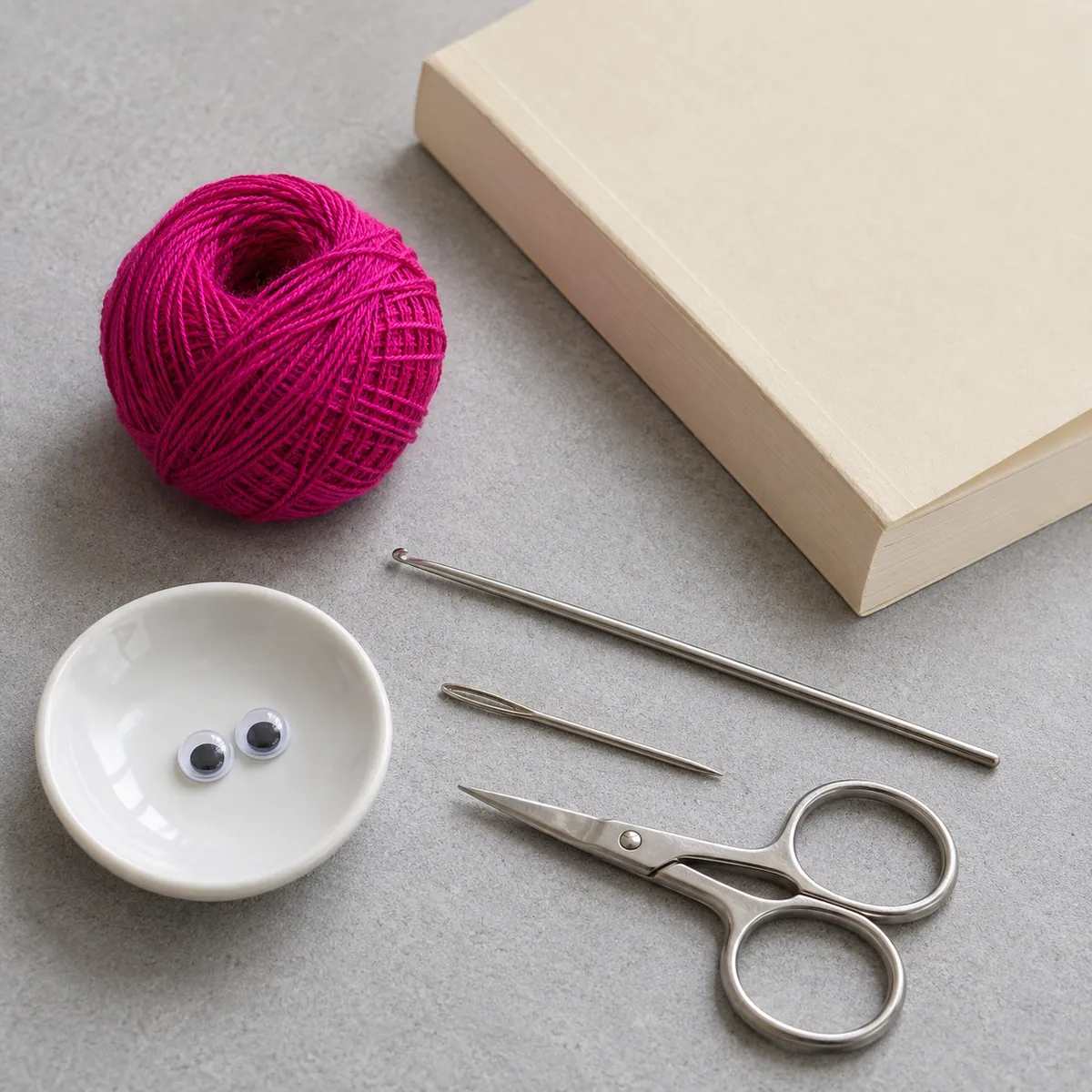
The bookworm bookmark has two distinct working zones: a short double-crochet curl and a long unworked chain tail. The useful counting question is not simply how many stitches the finished curl contains, but which of the seventy chain links have received them. This guide maps those positions while preserving the complete source method. The source estimates approximately 1.2 m of fine yarn and calls for a matching small hook, US size B or similar. Its chain count is fixed; the resulting physical length is not. The curl stays outside the book while the narrow chain marks the page.
Yarn and stitch language · Complete bookmark instructions · Straighten and finish · Check chain positions
A fine yarn scrap and a small hook
The source calls for approximately 1.2 m of fine scrap yarn and a matching small crochet hook, US size B or similar, plus scissors and a yarn needle. It also specifies 2 tiny wiggle eyes and craft glue. Alternatively, embroider 2 small eyes using contrasting yarn. A numeric hook size in millimetres is not provided, so use the stated size reference rather than treating a guessed conversion as a source measurement.
The approximately 1.2 m yarn length is a source estimate. The exact amount used depends on the selected yarn and how you work. Check your available scrap before starting and keep enough end for secure finishing. No fixed finished length, gauge, fibre or working time is given. The chain count is the technical reference supplied by the source, not a promise that every yarn will produce the same bookmark dimensions.
US crochet terms
This version uses US terminology. Ch means chain, dc means double crochet and sl st means slip stitch. The loop sitting on the hook is not counted as a chain. When you count back from the hook, locate the completed chain links below that loop. The first worked pair of double crochet stitches goes into the third chain from the hook, not into the active loop or the second chain.
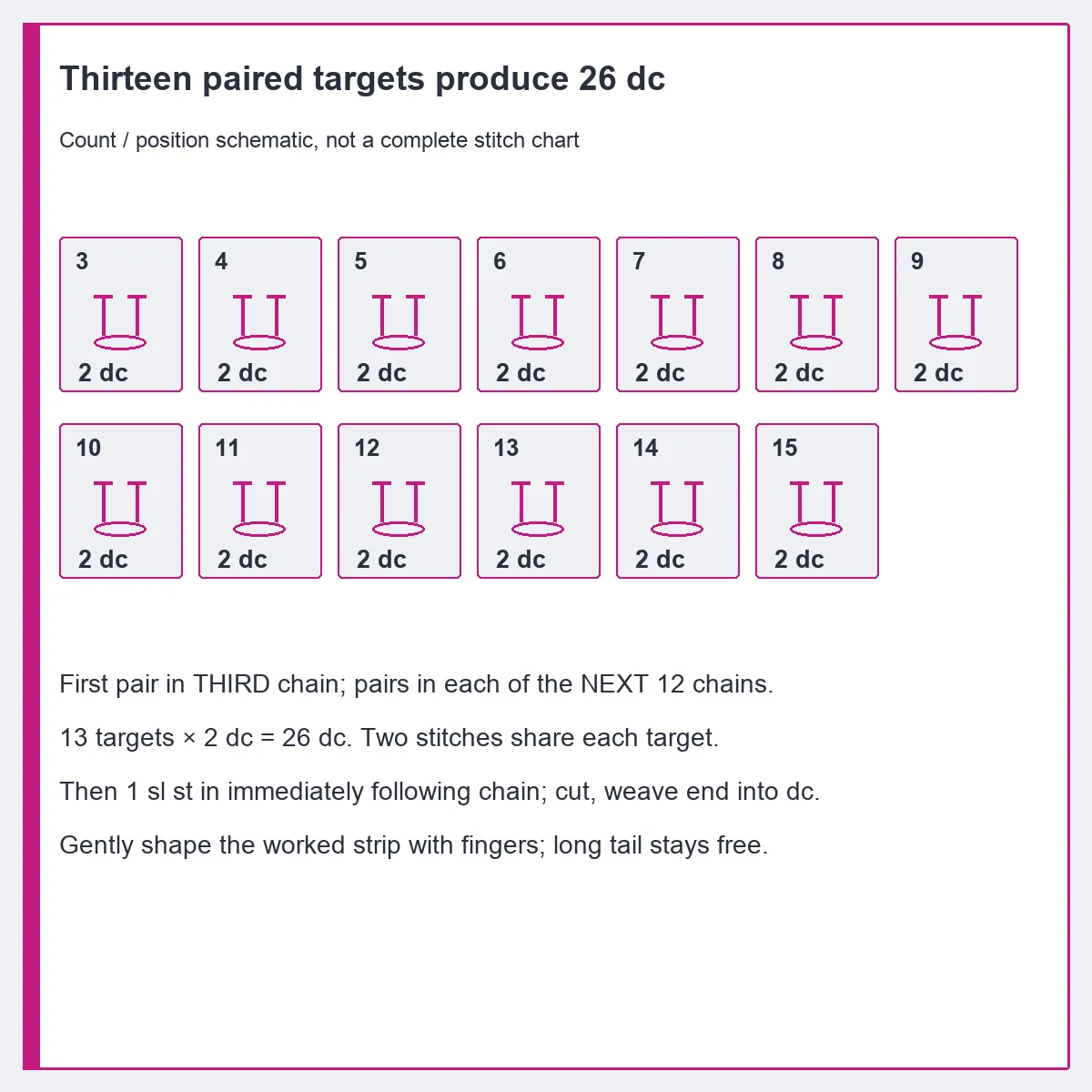
A double crochet pair shares one insertion point: work both stitches into the same chain before moving to the next. The pattern uses thirteen consecutive insertion points, each receiving two double crochet stitches. Count those positions separately from the total number of stitches, so that twenty-six stitches do not become twenty-six worked chains by mistake.
A solid magenta yarn is an optional colour direction for reading the double-crochet posts clearly. The source does not prescribe this shade. If choosing embroidered eyes, keep a little contrasting yarn separately from the main scrap. Colour can help reveal the structure; it does not change the chain counts or drying sequence.
Map the chain before adding the curl
Lay the beginning chain where its completed links can be seen. The loop currently on the hook belongs to the working action and is excluded from the count. Count the seventy completed links without repeatedly stretching them to make them easier to see. A removable marker at a completed link can help preserve a counting position, but remove it before it interferes with an insertion. The marker is not a chain and must not become an additional target when counting back from the hook.
The source turns the chain before working the short spiral. It does not ask for a new turning chain added to the seventy. Find the third existing chain from the hook, leaving the first two existing links unworked at that end. Both double crochets of the first pair enter that same third link. Complete the pair before advancing. It is easy to mistake two stitches for two destinations when they are worked quickly, so examine the insertion point as well as the stitch tops.
Thirteen destinations and twenty-six stitches are different units
The third chain plus the following twelve chains gives thirteen consecutive insertion points. Each receives a pair of double crochets. Counting those pairs gives the source total of twenty-six stitches. It does not mean that twenty-six chain links are worked. A note with separate columns for chain positions and produced stitches makes the distinction visible. If one pair is missing a stitch, its insertion position still exists; only counting chain targets would miss that error.
The immediately following chain receives the slip stitch. That action closes the worked section before the yarn is cut and woven into the double crochets. Do not work pairs down the entire remaining chain to make the body look fuller. The long free portion is an intentional part of the bookmark construction. Filling it would create a different object and remove the slender page-marking tail that distinguishes this pattern.
Account for the free tail without counting the hook loop
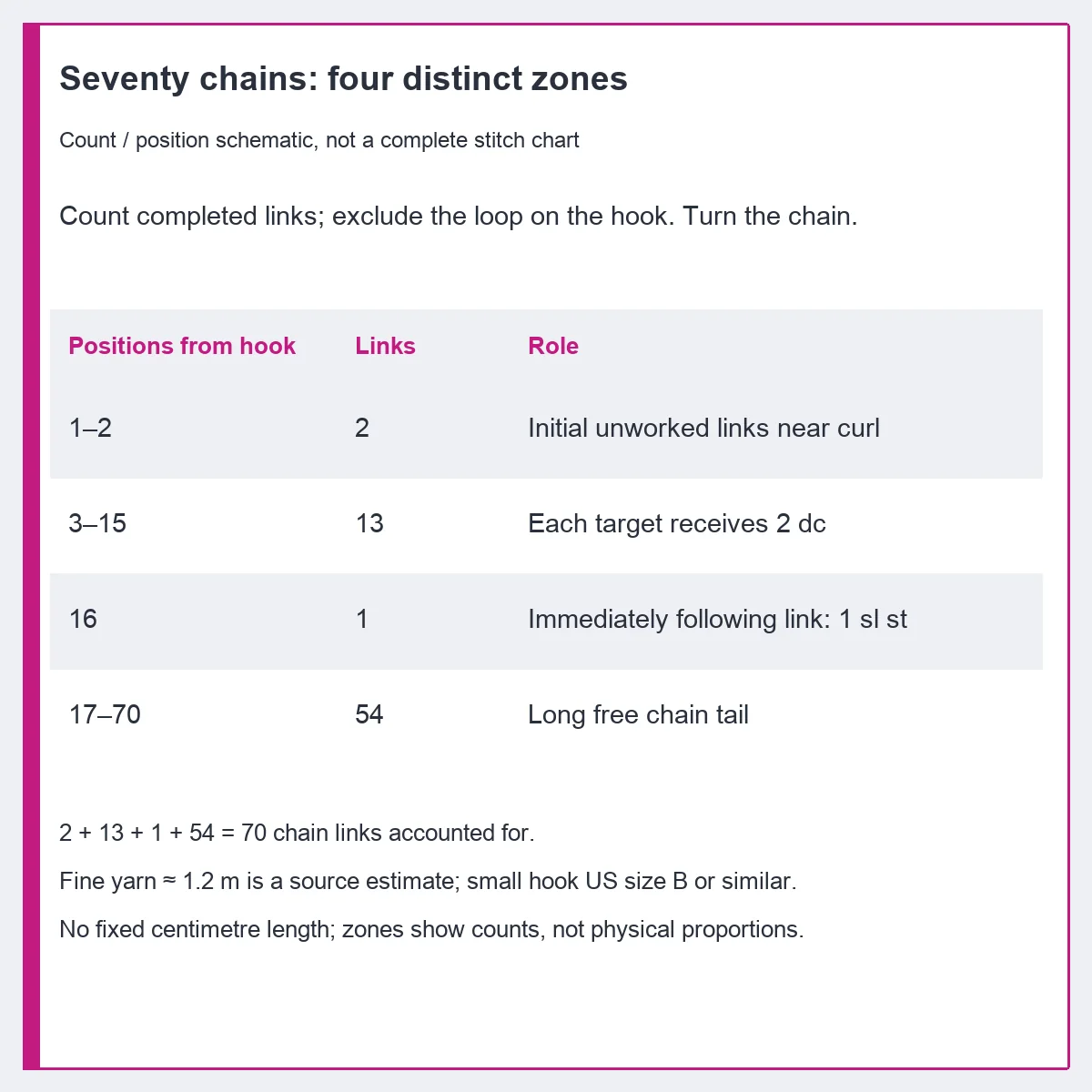
When numbered back from the hook, positions three through fifteen receive the thirteen pairs. Position sixteen receives the following slip stitch. Positions seventeen through seventy remain free, giving fifty-four unworked chain links in the long tail. The two initial unworked links near the curl are separate from that long tail. This positional check explains where the free chain comes from; it does not add any chains or change the source start.
Do not turn fifty-four free links into a centimetre promise. Fine yarns and personal chain tension can produce different lengths, even with the same count. Keep the actual selected yarn and hook with a sample note if you want another bookmark to resemble the first. A count is repeatable as an instruction, while a measured length belongs to the particular material and working conditions. Both are useful when labelled, but they answer different questions.
Bookworm bookmark: complete instructions
Begin with seventy chains
Ch 70 and turn the chain. Do not count the loop on the hook. Most of the chain remains free and forms the tail.
Work the short spiral worm
Work 2 dc in the third chain from the hook. Work 2 dc in each of the next 12 chains as well. You now have 26 dc in 13 insertion points. Work 1 sl st in the immediately following chain and cut the working yarn. Weave it into the double crochet stitches.
Gently twist the double crochet section into shape with your fingers. The doubled number of stitches along a short section of chain makes it curl by itself.
Straighten the tail and attach the eyes
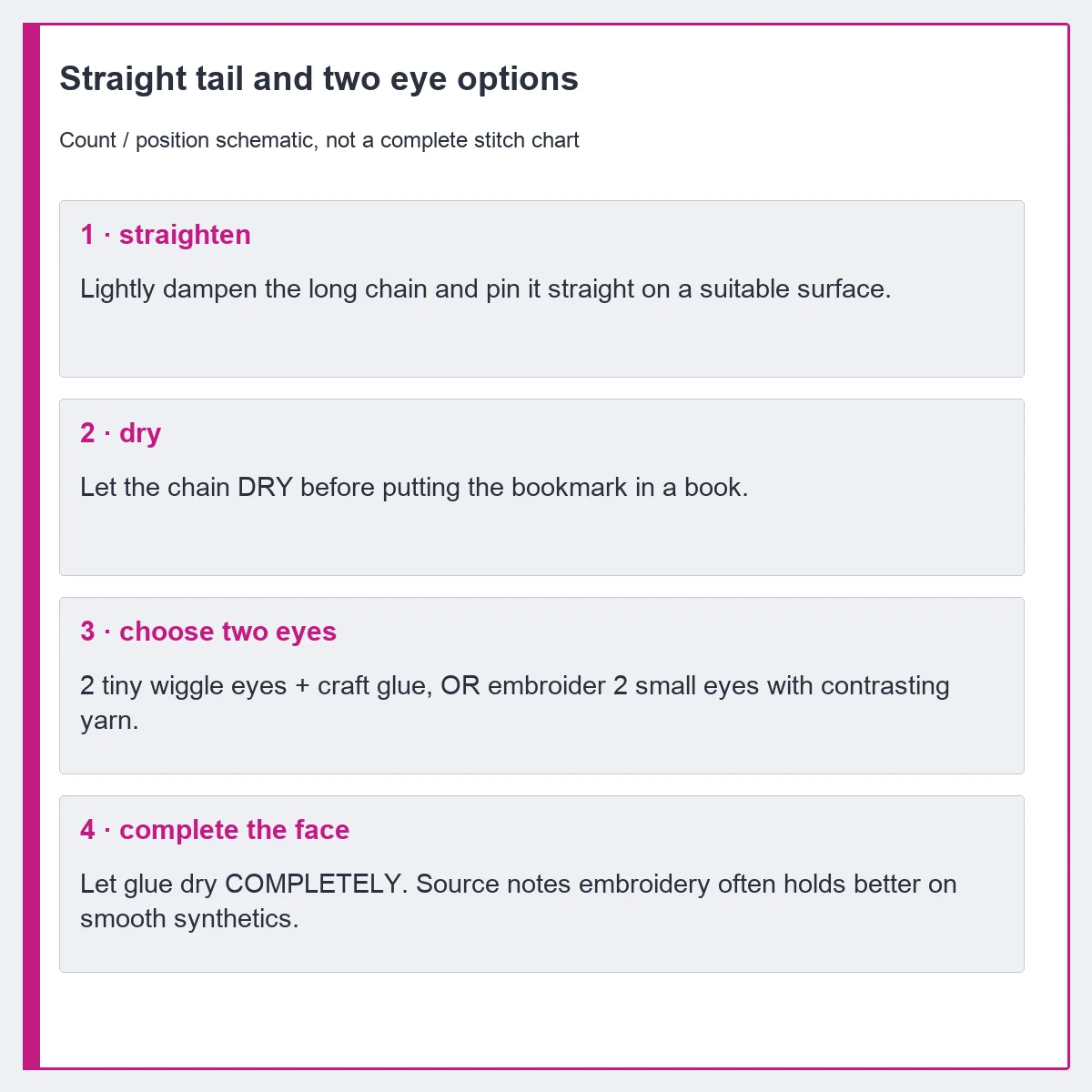
Lightly dampen the long chain tail and pin it straight on a suitable surface. Allow it to dry before putting the bookmark into a book. Glue the wiggle eyes to the spiral section and let the glue dry completely. Embroidered eyes often hold better on smooth synthetic fibres.
Understand the curl as local crowding
Two double crochets share each of the thirteen short-section chain targets. That extra stitch width relative to the foundation encourages the worked strip to curl. The source then asks for gentle shaping with the fingers. Shape the strip without forcing it into a prescribed number of visible coils. No fixed count of spiral turns or finished curl diameter is given. A photograph with a particular number of turns would not replace the twenty-six-stitch check in the written method.
A straight-looking section is a reason to inspect the pairs before pulling harder. Check whether every intended target holds both double crochets and whether any were placed into separate chain links by mistake. Also check that the slip stitch comes immediately after the thirteenth target. These are count and placement questions. They can be answered by tracing the chain rather than inventing additional stitches or winding the fabric tightly enough to conceal the underlying structure.
Keep the free chain and worked strip distinguishable
The tail can be read as a narrow line of chain links, whereas the curl has visible double-crochet posts. Keep the end woven into the worked stitches as instructed rather than trailing along the free chain. The source's finishing sequence uses the worked section to secure the cut end before shaping and straightening the tail. A loose end crossing the page-marking chain could be mistaken for a second tail and make later handling less clear.
Inspect by location when the totals disagree
I have twenty-six stitches but too little free chain
Trace the actual insertion points. Correct stitch total alone does not prove that all pairs share thirteen consecutive chain links. Separate stitches placed in successive chains could use too much of the foundation while still giving the same top-edge count. Find the first third-chain target, then follow each pair to the next link. Check the single slip-stitch location separately. Do not lengthen the free tail with extra chains as a way of hiding a misplaced worked section.
Is the chain made longer while turning?
The source says to turn the existing chain; no additional turning chain is specified at that stage. Keep the original seventy-link count. The active loop remains excluded. If a pause makes the starting location unclear, recount the completed links before working the first pair. A clear start is simpler than removing a long series of correctly formed pairs that were placed one chain too early or too late.
Should the eyes determine how tightly the curl is wound?
Follow the stitch construction first, then choose the face location on the spiral section. The source provides two tiny wiggle eyes with craft glue, or two small embroidered eyes in contrasting yarn. These are alternative finishes, not extra crochet targets. Let the glue dry fully when using it. The source notes that embroidery often holds better on smooth synthetic fibres. Do not change the stitch count just to create a wider flat area for an eye.
Keep the book-facing finish separate from the spiral count
The long chain is lightly dampened and pinned straight, then allowed to dry before entering a book. Straightening is a finishing action, not a way of changing the number of links. Lay it without pulling a new length into it and follow the selected yarn's care guidance. Keep damp yarn and uncured glue away from pages. When the bookmark is ready, only its narrow tail belongs between the pages; the worked curl should remain outside rather than being pressed into the book.
The spiral worm exercise is a different project with a worked body, rather than this long free-chain page marker. Its familiar curling effect must not supply replacement stitch counts here. For another small construction from fine supplies, see the mini granny earring structure. Browse the pattern collection for other projects and the author page for the editorial background.